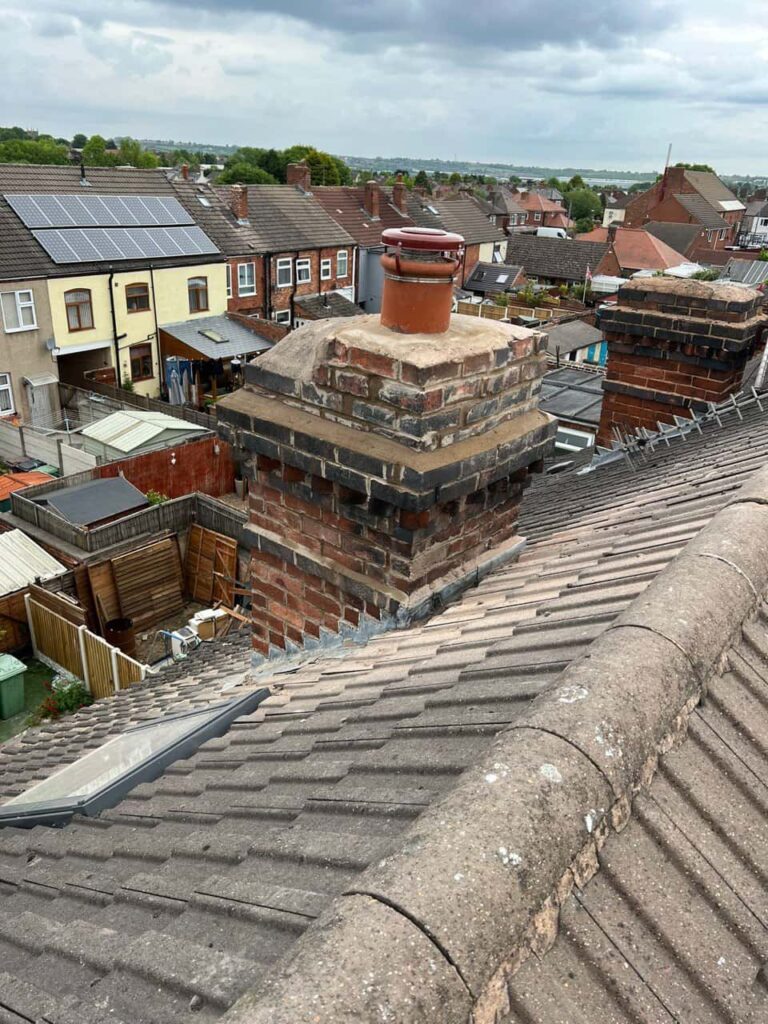
Chimneys are one of the most exposed elements of any roof, standing above the main structure and facing constant weather exposure throughout the year. While their purpose is essential, chimneys are also a common source of roof leaks when deterioration begins. Understanding how chimney damage allows water into roof spaces helps homeowners recognise risks early and take appropriate action.
At TRP Roofing Hedon, we frequently identify chimney-related defects as the underlying cause of moisture problems within roof voids and loft spaces across the area.
Why Chimneys Are Vulnerable to Water Ingress
A chimney is made up of multiple materials working together, including brickwork, mortar joints, lead flashing, and flaunching. These components must form a continuous weatherproof barrier where the chimney passes through the roof.
Over time, exposure to wind, rain, frost, and temperature changes causes gradual deterioration. Even small weaknesses can allow water to penetrate the structure, particularly during prolonged or wind-driven rainfall common in Hedon.
Deteriorating Mortar Joints
Mortar joints are designed to accommodate movement and protect the chimney structure. As they age, they can crack, erode, or fall away, leaving gaps between bricks.
Once mortar deteriorates, water can enter the chimney stack and travel down internally. This moisture often reaches roof timbers or insulation before any visible signs appear inside the property, allowing damage to spread unnoticed.
Defective Lead Flashing Around the Chimney Base
Lead flashing forms a critical seal between the chimney and the roof covering. Its role is to divert water away from this junction and prevent it from entering the roof space.
If flashing becomes loose, cracked, or pulled away due to age or movement, rainwater can pass directly into the roof structure. Because this area is hidden beneath roof tiles, defects often remain unseen until internal symptoms develop.
Cracked or Failing Chimney Flaunching
The flaunching sits at the top of the chimney and seals around chimney pots, directing water away from the stack. When flaunching cracks or breaks down, water can collect and soak into the chimney structure.
From there, moisture can migrate downwards through the chimney and into the roof space, affecting rafters, battens, and insulation below.
Porous or Weathered Brickwork
Over years of exposure, chimney bricks can become porous, particularly if they have suffered repeated freeze-thaw cycles. In some cases, the brick face begins to break down, allowing water to be absorbed more easily.
Once water enters porous brickwork, it can pass into the internal structure of the chimney and spread into surrounding roof areas, often without obvious external warning signs.
Why Chimney Leaks Are Often Missed
Water entering through a damaged chimney does not always drip straight into living spaces. Instead, it may track along roof timbers, soak into insulation, or evaporate before leaving visible marks.
This delayed visibility explains why chimney-related leaks often go undetected until significant internal damage has already occurred. By the time staining or damp patches appear, the original entry point may be far from where the damage is noticed.
The Importance of Professional Roof Inspections
Because chimney defects are difficult to assess from ground level, professional inspections play a vital role in identifying early signs of failure. Experienced roofers know where to look for subtle issues such as lifting flashing, cracked mortar, or failing flaunching.
Early intervention helps prevent water ingress from spreading further into the roof structure and protects the long-term condition of the property.
Conclusion
Damaged chimneys are a common but frequently overlooked cause of water entering roof spaces. Failing mortar joints, defective flashing, cracked flaunching, and porous brickwork all provide pathways for moisture to penetrate quietly and spread over time.
For homeowners in Hedon, East Riding of Yorkshire, understanding how chimney damage affects roof integrity is key to preventing wider issues. If you have concerns about your chimney or suspect hidden roof leaks, TRP Roofing Hedon can provide professional assessments and expert guidance to help identify and resolve problems before they escalate.
Call us on: 01482 422 392
Click here to find out more about TRP Roofing Hedon
Click here to complete our contact form and see how we can help with your roofing needs.